

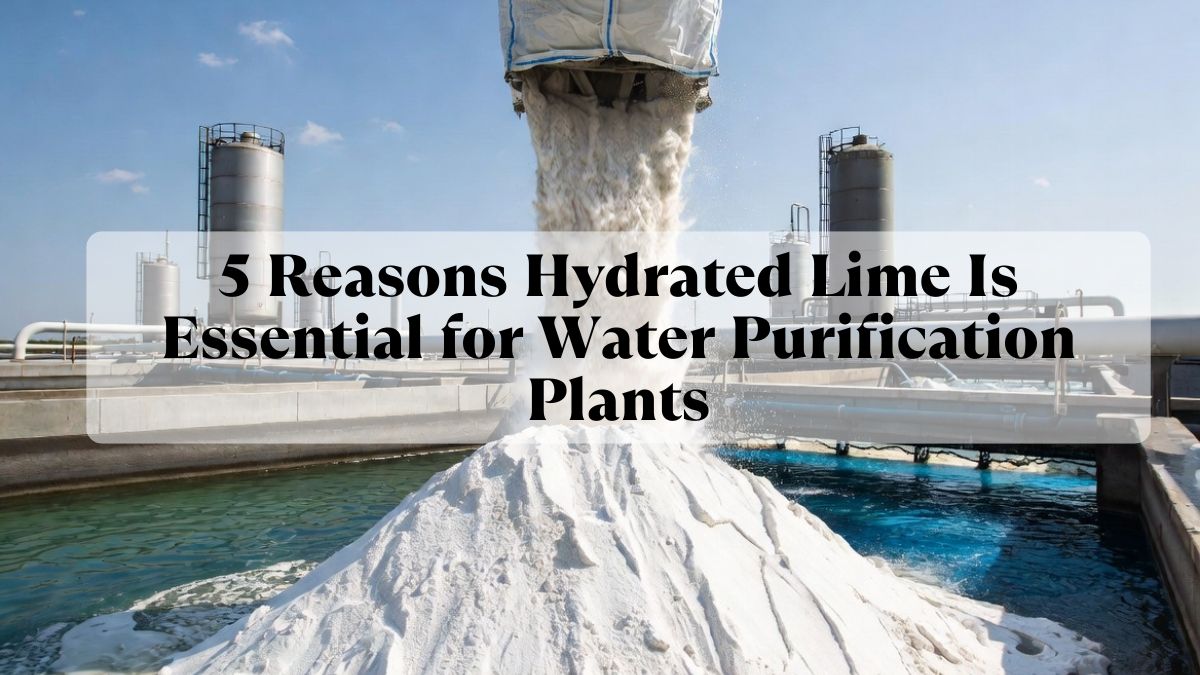
Water purification is a critical process in ensuring safe and clean water for communities, industries, and agriculture. Among the various chemicals used in treatment processes, hydrated lime stands out as one of the most versatile and essential materials. Known for its effectiveness, affordability, and wide application range, hydrated lime plays a vital role in modern water treatment systems.
In this blog, we will explore the top 5 reasons why hydrated lime is indispensable in water purification plants, along with its applications, benefits, and why choosing the right hydrated lime manufacturer or hydrated lime supplier is crucial for operational efficiency.
Hydrated lime, chemically known as calcium hydroxide (Ca(OH)₂), is a fine, dry powder produced by adding water to quicklime (calcium oxide). It is widely used in water treatment due to its alkaline nature and ability to neutralize acids, remove impurities, and improve water quality.
Common forms include:
One of the primary roles of hydrated lime in water purification is pH control.
Hydrated lime is highly alkaline, making it ideal for:
Water sources often contain harmful contaminants such as:
Hydrated lime reacts with dissolved metals to form insoluble precipitates, which can then be easily removed through filtration or sedimentation.
This makes hydrated lime powder an essential component in both municipal and industrial water treatment plants.
Coagulation and flocculation are vital steps in water purification where small particles clump together for easier removal.
Why is hydrated lime used in coagulation?
Hydrated lime improves alkalinity and helps particles bind together, making it easier to remove impurities during water treatment.
Compared to many chemical alternatives, hydrated lime is:
Water treatment plants operate at large scales, making cost efficiency crucial. Choosing a reliable hydrated lime supplier ensures:
Additionally, sourcing from a trusted hydrated lime manufacturer ensures compliance with industry standards and optimal performance.
While hydrated lime is not a primary disinfectant like chlorine, it plays a supportive role in pathogen control.
In wastewater treatment, hydrated lime is often used to:
Hydrated lime helps control pathogens by increasing water pH, creating an environment where harmful microorganisms cannot survive effectively.
Hydrated lime is used across various stages of water treatment:
Not all hydrated lime products are the same. The effectiveness of your water treatment process depends heavily on the quality of lime used.
A trusted manufacturer of hydrated lime ensures:
Hydrated lime is a cornerstone of modern water purification systems. From pH adjustment and impurity removal to improving coagulation and supporting disinfection, its role is both extensive and indispensable.
For water treatment plants aiming for efficiency, safety, and cost-effectiveness, investing in high-quality hydrated lime powder from a trusted hydrated lime manufacturer or hydrated lime supplier is not just a choice—it’s a necessity.
As global water demands continue to rise, hydrated lime will remain a critical component in delivering clean, safe, and sustainable water solutions.
Hydrated lime is used to adjust pH, remove impurities, enhance coagulation, and support disinfection processes.
Yes, when used in controlled amounts, hydrated lime is safe and widely approved for water treatment applications.
Quicklime (CaO) is more reactive, while hydrated lime (Ca(OH)₂) is safer to handle and commonly used in water treatment.
It reacts with dissolved metals to form insoluble compounds that can be filtered out.
You can source it from a reliable hydrated lime supplier or certified hydrated lime manufacturer to ensure quality and consistency.






.jpg)
.jpg)